
The factions
Heaven's Wardens, Heirs and Apostates, what each says about the House, how each looks in the world, and why each wants you.
 Art in progress
Every banner in heaven points at the same door.
Two great factions and one renegade fight heaven's war, and what divides them is what they say about the House, the round domed house at the centre of heaven where God is supposed to live. Alex decided them on 25 October 2026, with where each stands and how angels look in the world. How the war they fight is played out on the world below is on heaven's war.
The world's own peoples, the Hearthfolk, the Coalwrights, the Stilled and the drowned, are not factions of this war; they are its board. They are on the world between.
The Wardens
 Art in progress
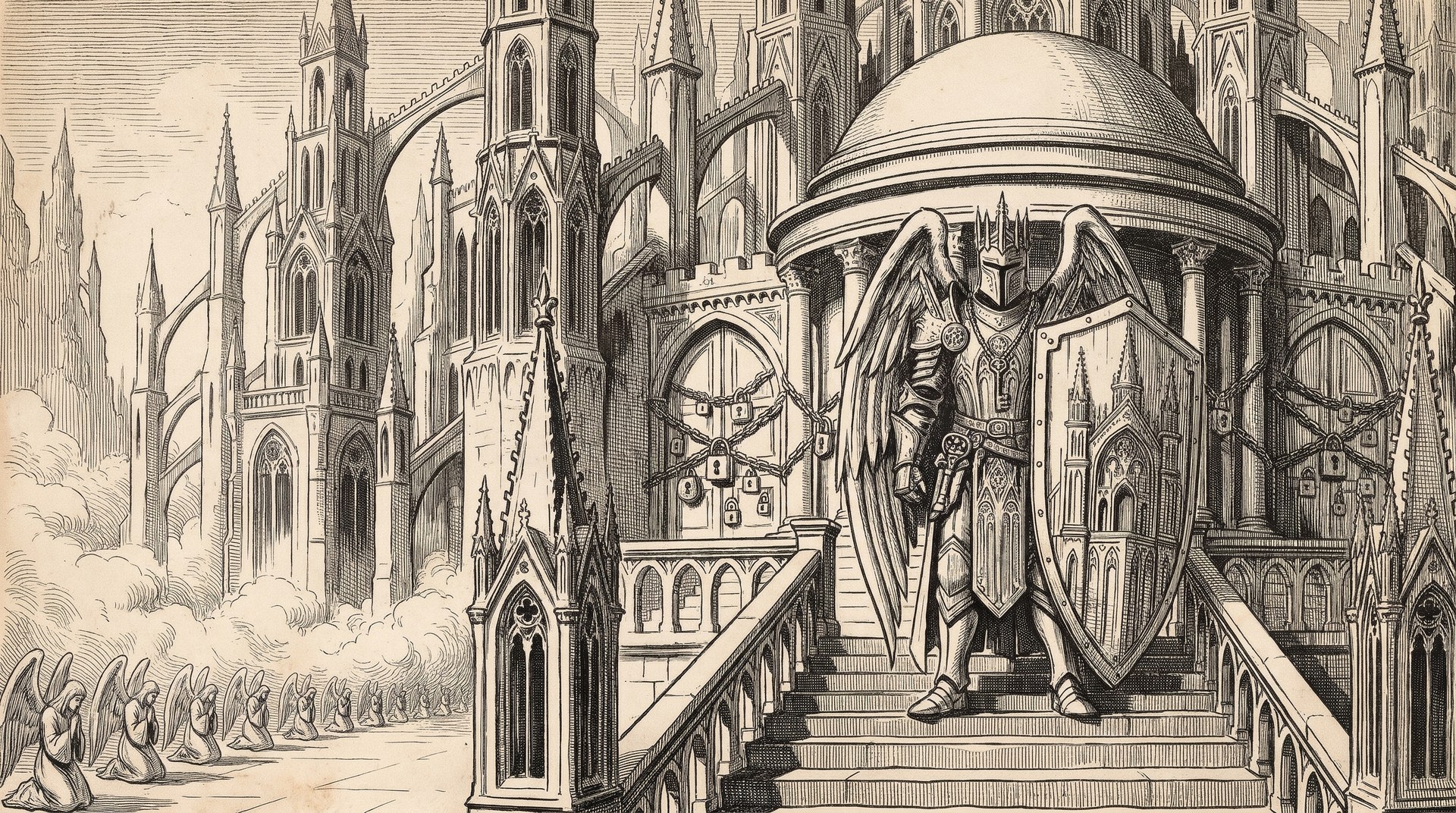
The Wardens say God chose them to protect the House. God is inside and will come out when God wills; until then they forbid anyone to enter, and keep heaven in order. Their hubris: they rule from the step of a throne nobody sits on. They are right that nobody should presume, and wrong because the waiting has become their throne.
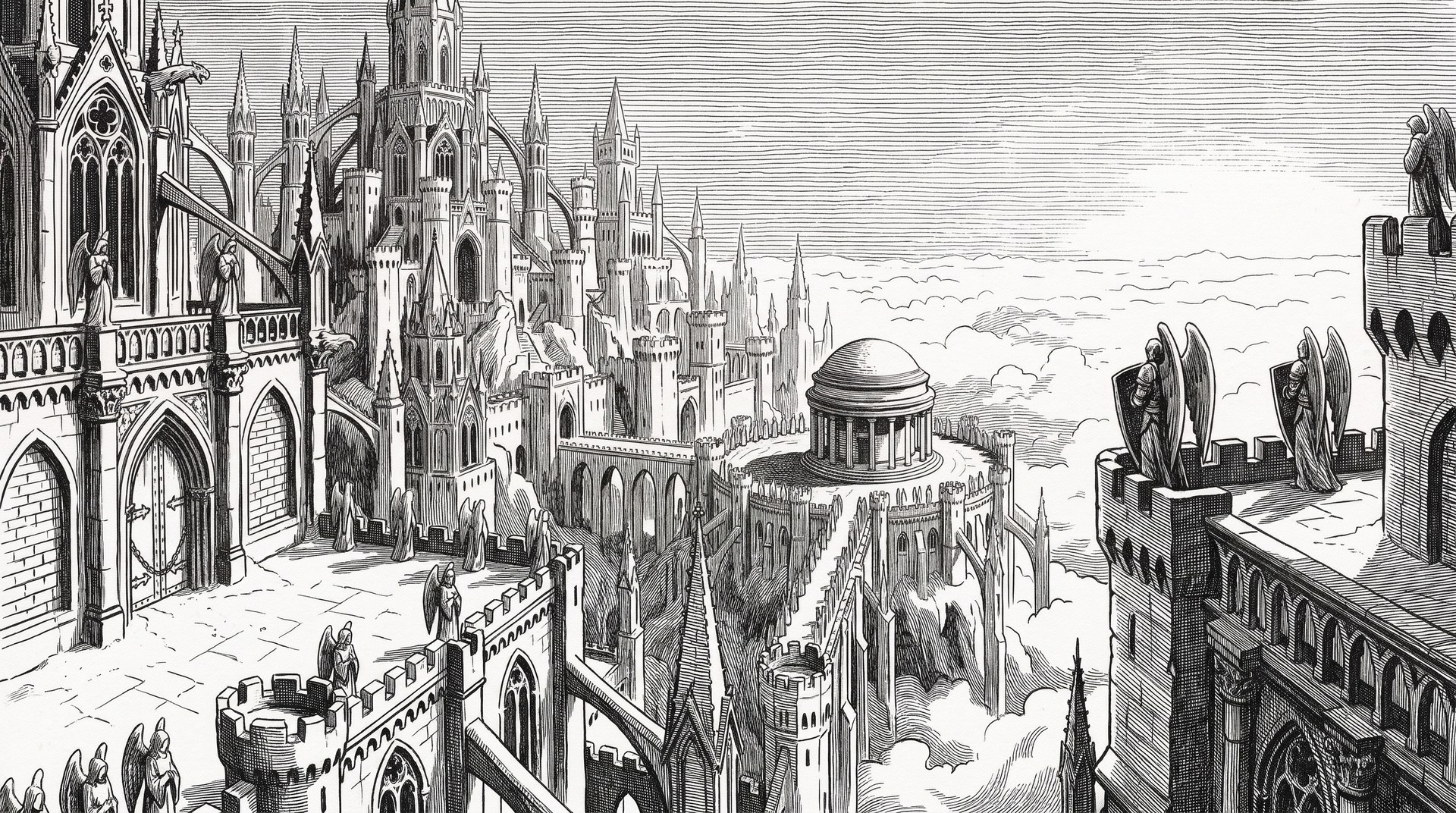
They are the dominant faction, and a declining one. They hold the main celestial city, where God is supposed to live and the House stands.
The Heirs
 Art in progress
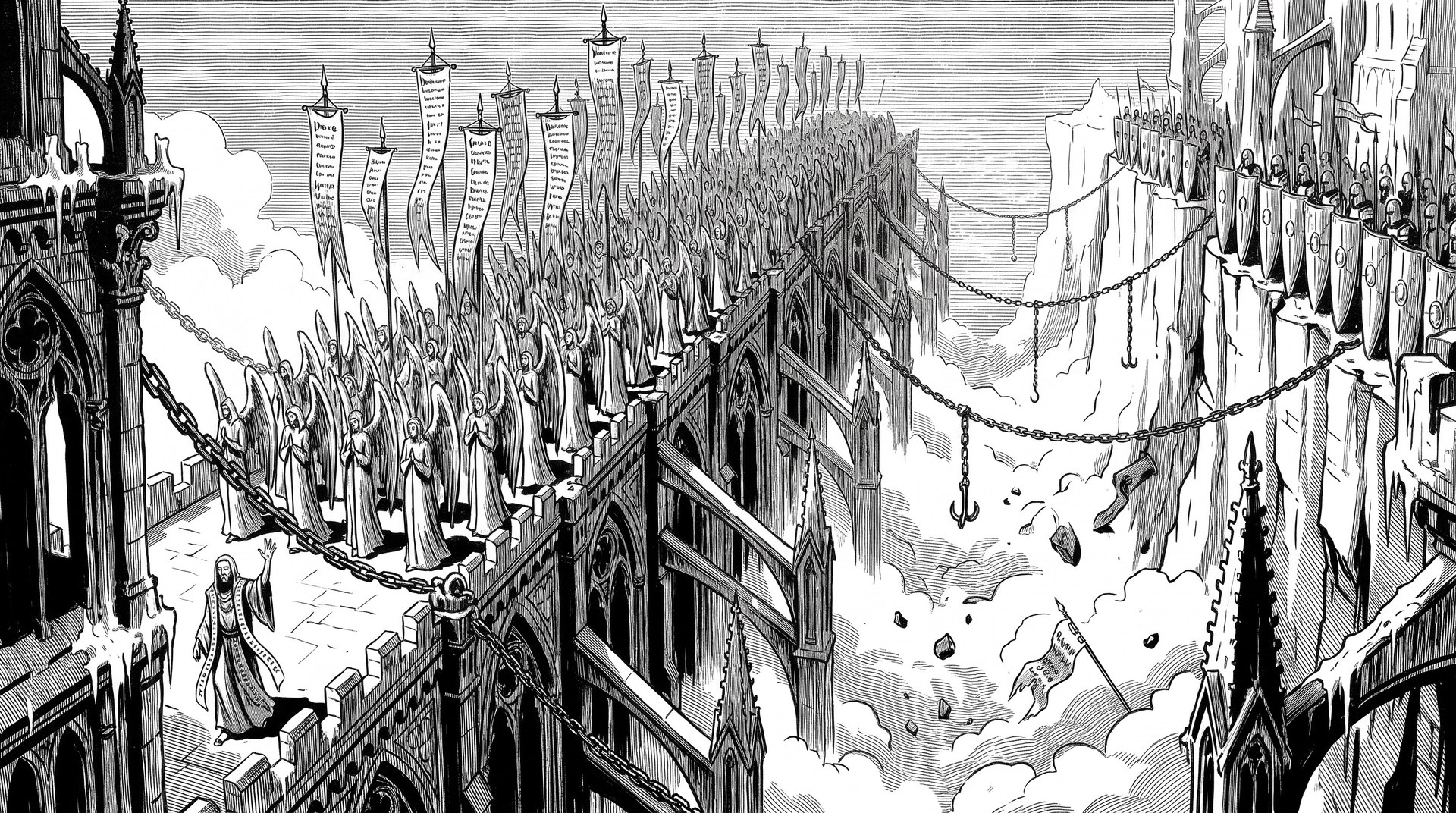
The Heirs follow a prophet, who says God speaks through him and has asked him to claim the throne. They want the door opened, for the Prophet alone. Theirs is the plainest hubris: they are right that heaven is rotting on habit and someone must act, and wrong to trust one voice nobody else hears. The Prophet is sincere, and he has one thing nobody else has: he listens at the door, and nobody can prove he hears nothing.
They wage war to enter the Wardens' city; they have their own territory and their own cities.
The Apostates
 Art in progress
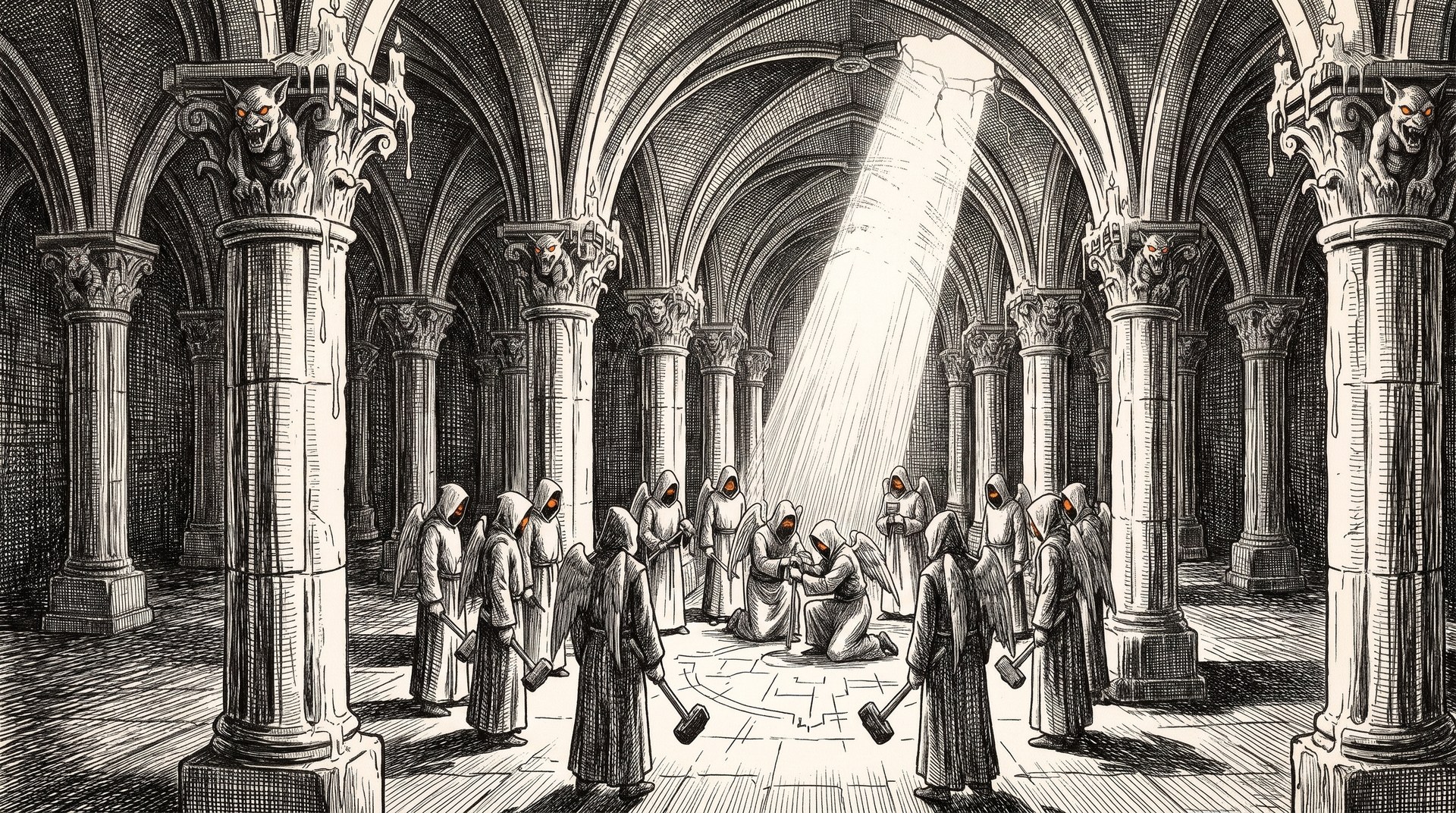
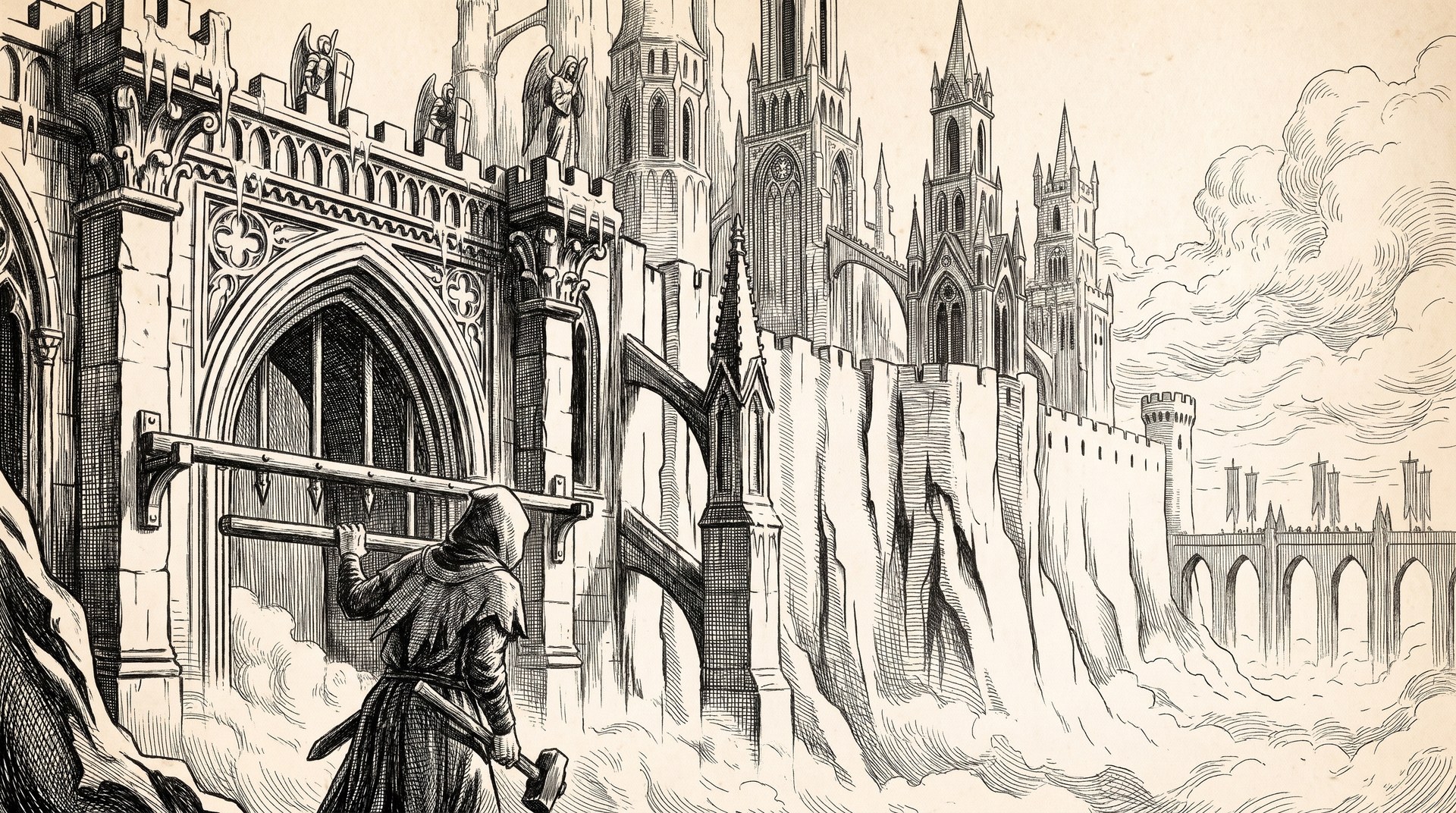
The Apostates, the renegades, say there shall be no God, whoever is inside. That is a will, not a belief: if anyone is in the House, they would kill God. They want the House broken, so that no throne stands over angels. They are right that heaven lives on nothing and fights over a door nobody has opened, and wrong because they would destroy heaven's only centre, and whatever is in it. Their role, as Alex put it the same day, is to end heaven once and for all: to stop the endless cycle of suffering, and let the world be a place of growth and peace for its creatures, rather than the chessboard heaven uses to wage its war.
They are renegades, neutral between the two great factions. They play their position whatever way serves them, and fight by insurgency. They found a way to kill an angel, and it works only in heaven: what they kill does not end, but falls to the bottom of the world with no memory. Every player is one of those. Having freed you against your will, they raise you back up and try to win you over on the climb; you may refuse them, and make all their effort futile. Both great factions buy fallen from them in secret, through go-betweens, while their faiths below burn the Apostates' believers. Each thinks the other doesn't know. The rest is on the overview.
 Art in progress
Two against one
Each pair shares one belief the third denies. The Wardens and the Heirs say God is real; the Heirs and the Apostates say the door must open; the Wardens and the Apostates say no angel sits on the throne. Any two that beat the third then fall out, so the war never settles. The Apostates are never stamped out: they have no leader to cut down, and every climb sends up new angels who may choose them.
At the top of the first climb you choose a faction, and the choice is final. It gives you its own skills, and it changes your story: what your memories show, and who in heaven speaks to you. A faction adds; it takes nothing away. Every way of killing below is open to any fallen, and a faction adds its own few skills and its angels' way of fighting on top of any build.
Angels in the world
Alex decided on 25 October 2026 how angels exist in the world, and what the world shows of them.
- Heaven's white is a glamour. It only holds in heaven. In the world, angels do not wear a human form or anyone's body: they exist there directly in their true form, the one the white hid. The true forms are white too, a worse white than the glamour's: bleached, cracked, bone and porcelain and a radiance that blinds.
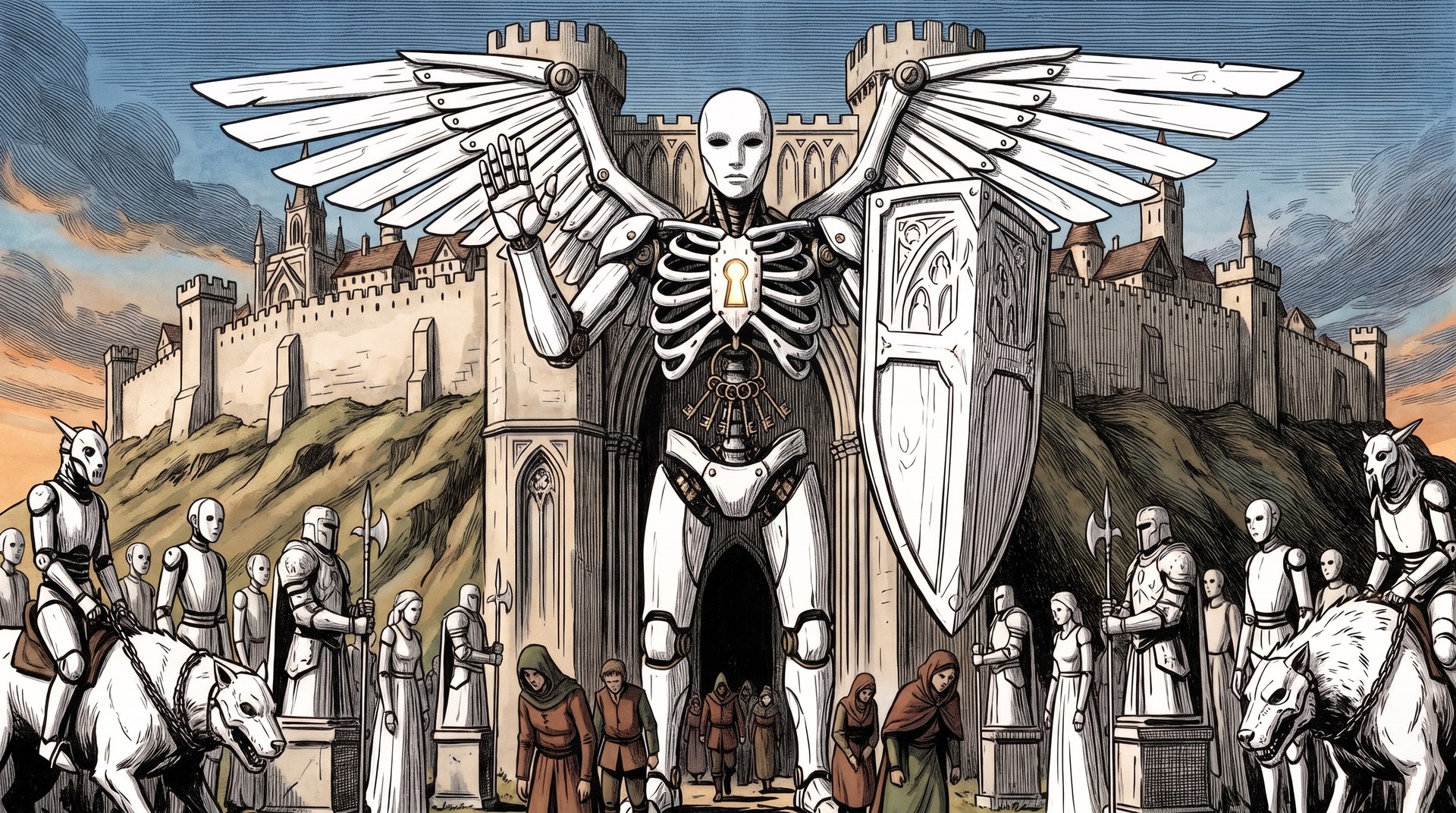
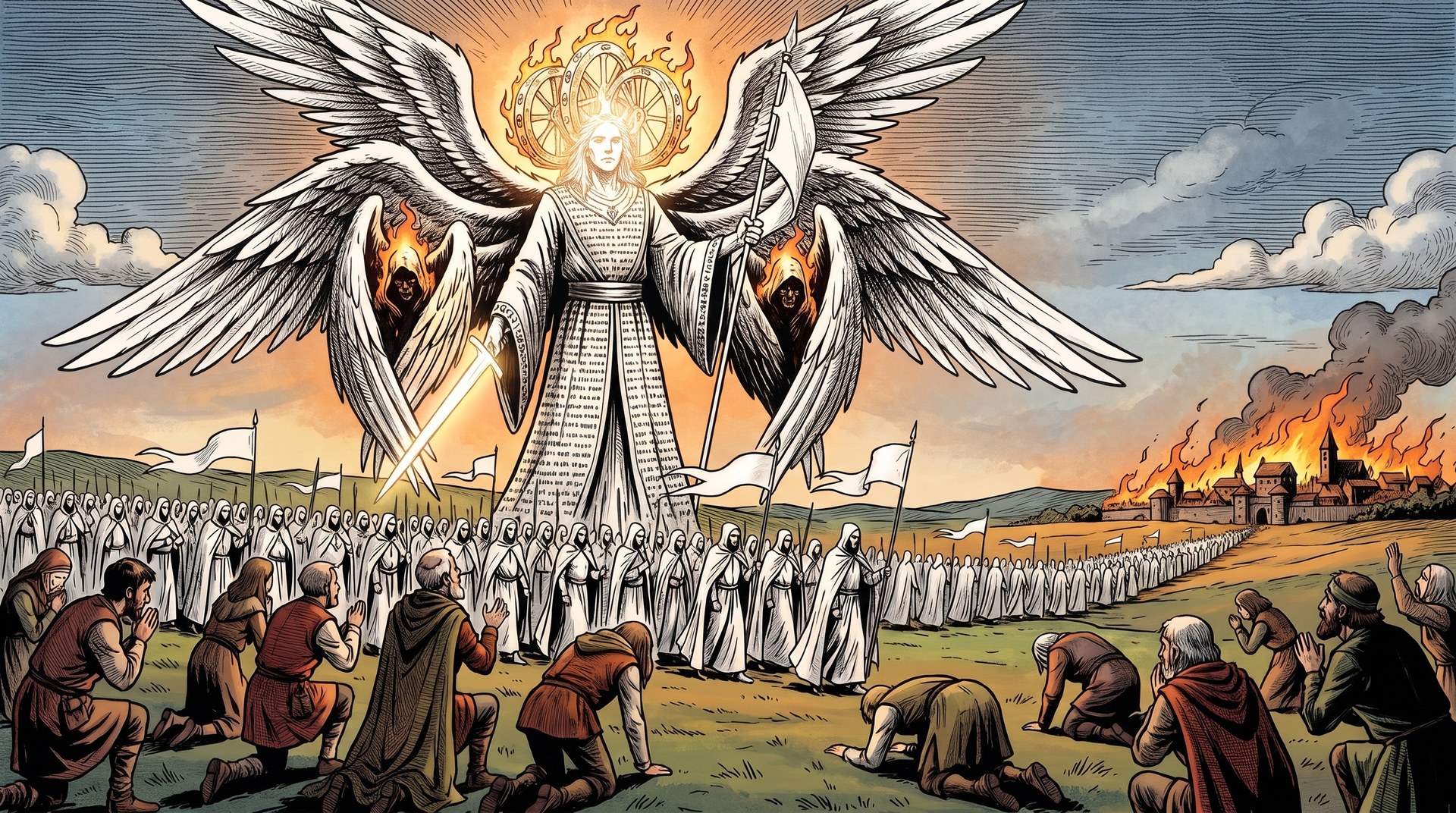
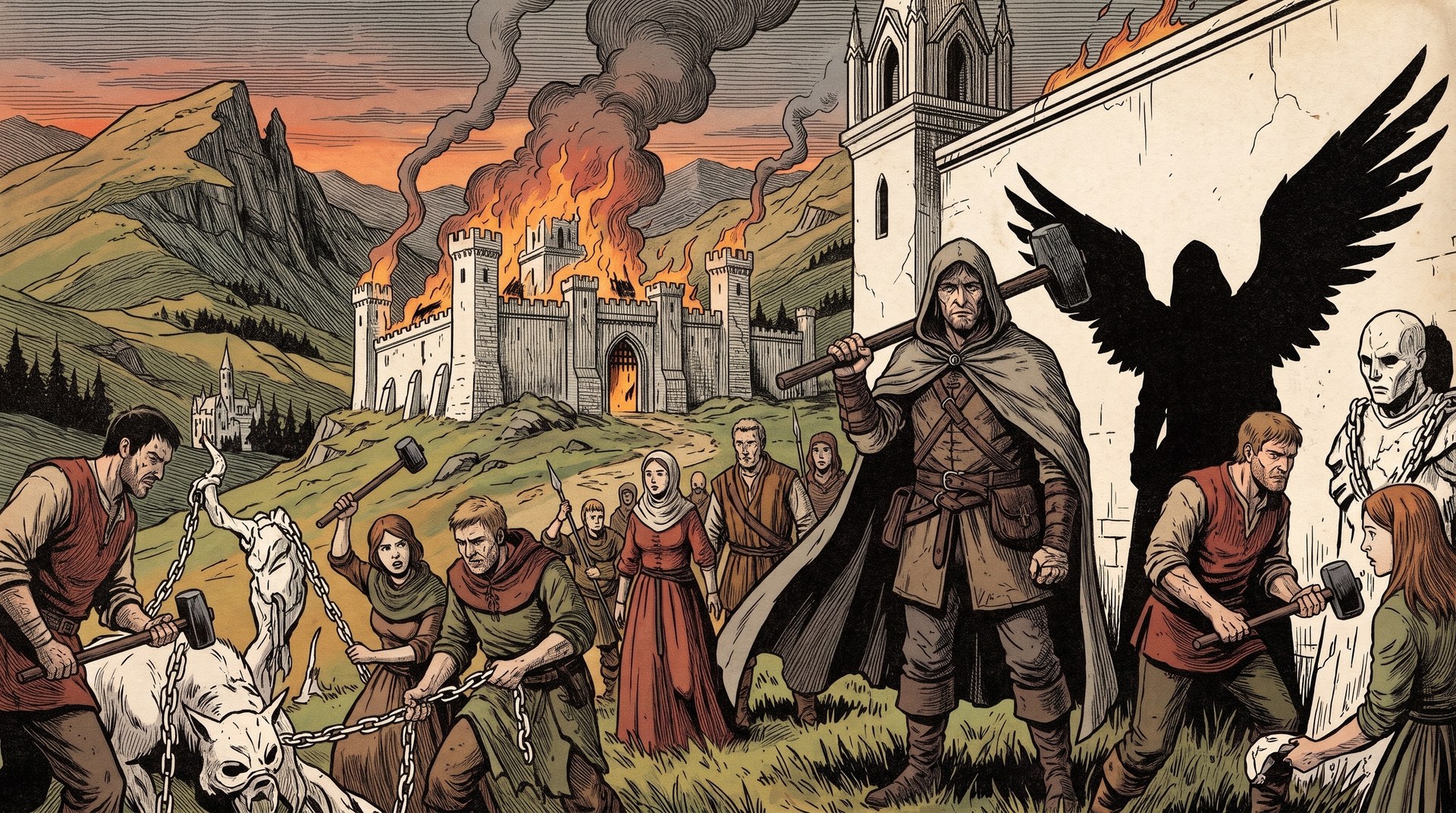
- Each faction has its own. The Wardens are lifeless: golems, empty armour, automata, puppets. The Heirs look godlike. The Apostates look human.
- The fall burned yours off. The fallen are the only clean angels. The climb back slowly brings the corruption back: redemption, and its price. (More on who you are.)
- The world does not know heaven. Its people have only their religions, and the Apostates' religion is forbidden. The other faiths grew up under the great factions' pieces, the Heirs' preachers and the Wardens' bound temples, and they burn the Apostates' believers, never knowing who taught them to.
- The Apostates and the player. Alex sees the Apostates, the most neutral and the most human of the three, as a big influence on the player during the campaign.
 Art in progress
 Art in progress
 Art in progress
Proposal
What the true forms say
Each form is its faction's hubris. The Wardens kept the door so long that nothing is left inside them: they wait, so they are hollow, worked by keys and habit. The Heirs want God's throne, so they already look like what they want, with the Bible's six wings, wheels and burning faces. The Apostates renounced heaven, so they look like the people of the world.
His ribs had a keyhole, and the key was still turning.
The crusade never looks up at what leads it.
An Apostate's shadow is the only part of him that is still an angel.
The forms are the troops' shapes too. A Warden region is kept by smaller puppets, masked beasts and stone sentinels; an Heir region by zealots kneeling under something radiant; an Apostate region by ordinary people with hammers.
White is the mark. Warden porcelain, Heir radiance: in a coloured world, heaven's white is how you tell an angel's work.
The fallen are the only angels a child can look at, on the climbs. Nothing in you shows under the sky, because the fall left nothing to show.
On the road to redemption, the fall is the redemption, and the climb is its price.
Proposal
How the factions play
The Wardens.
Every Warden carries a key, and no two are the same.
The Wardens are the only angels who never look at the House.
Broad and upright, with tower shields, wings folded tight like a cloak, always facing away from the House. Their skills bind, and bend any trade toward holding ground: chains that drag, locks that pin an enemy in place, a shield wall. The Doorward speaks to you, perhaps named Abdiel, after Milton's seraph who stayed loyal. Memory: you stand with your back to the bronze doors, a key heavy at your neck. A procession stops at the edge of the court, you lower your spear, and they kneel to you.
The Heirs.
The Heirs have already measured the Prophet for the crown.
The Prophet has never once said what God's voice sounds like.
Tall and thin, wings raised high, banners written edge to edge with the Prophet's words, moving in lines like a procession. Their skills rally, and bend any trade toward a host: banners that lift kin and what they raise, a judgement called down from above. The Prophet speaks to you himself: Ithiel ("God is with me", from Proverbs 30, where Agur admits he does not know the holy), whom other angels call the Listener. Memory: a silent crowd on the steps. The Prophet has his cheek against the door, listening. He straightens and turns, and the banners go up. You never hear what he said.
The Apostates.
They swing their hammers with their eyes shut, in case something answers.
Wings clipped short, the only angels who look smaller, a hammer over the shoulder. Their skills break, and bend any trade toward ruin: blows that shatter armour and grow stronger against bigger enemies. No leader speaks to you; whoever hands you the hammer does. Heaven calls them the Apostates, because all of them once believed and it is the worst word heaven has; they call themselves the Unmakers. Memory: dark under the walls. Nobody speaks while you bind each other's wings short with cord. Someone hands you a hammer made below, by men, for stone.
Wing pose is the silhouette key: folded for the Wardens, raised for the Heirs, clipped for the Apostates. Heaven has no colour, so this is how a horde reads at a glance.
Every faction clears the game solo. The skills are how each one kills, not whether.
A memory may show you serving a side you never chose. Before your first fall you were something else.
Proposal
The Apostates on the climb
The second time she found you, she didn't have to say her name.
- They find you first. Where the fallen wake, an Apostate is waiting: human-looking, plain, with a hammer made by men. She is the first voice of the campaign, the one who explains the world, and the one who hands you your first weapon.
- They are your way through. The great factions hold the world's regions; the Apostates know the gaps. They unbar the gates, cut the bridges, hide you from champions, and send you after the ones they cannot kill themselves. Their cells live in the world's towns, among the people, so the campaign's hubs are full of them.
- They are never simply right. They made you fall: every fallen is an angel they cut loose, in the hope it will fight beside them, and nobody asked you first. Each act shows a little more of what they have done and what they want you for, until at the top you choose: join them, or one of the great factions they taught you to hate.
- The end they want has a price. Ending heaven may end the world with it, and it surely ends the fallen: no seat to climb back to, no grace falling. Every coal in Velmarch's hearths is fallen grace, and the Apostates say the world will be warm enough without it. Nobody knows. They are the only faction fighting for the world, and the only one that would end themselves to win.
- They remember; you don't. The Apostate who finds you at the bottom knows you very well, and you don't know her. She never says who paid for your fall, if anyone did. At the top she cuts you loose a second time, in the dark, and when she finds you a hundred years later, you know her.
Open questions
- The names of the Prophet and the Doorward: Ithiel and Abdiel are proposals.
- Whether the Apostates' own name for themselves, the Unmakers, is kept.
- The name of the Apostate who finds you where you wake. The pages leave her unnamed.