
Shape language
Six monster families, each readable as a black shape at forty pixels tall in a crowd of two thousand, and the shapes of heaven's three factions, their true forms and their troops, readable at a glance in a world without colour.
 Art in progress
Design every monster as a black silhouette first.
The camera looks down at three-quarters, the way it does in the game, and a monster on screen is about 40 pixels tall, in a crowd, in the dark, in a sunlit field or on the white stone of heaven. At that size texture is invisible and faces don't exist. What reads is the outline, and the light on it.
So each family of the bestiary has its own shape language, chosen so that a player can tell a Gloom Spider from a Hollow Ghoul by silhouette alone, at a glance, while two thousand of them press in from the edge of the light. Heaven adds a harder test: it has no colour, so its three factions have to read by shape alone.
The six families
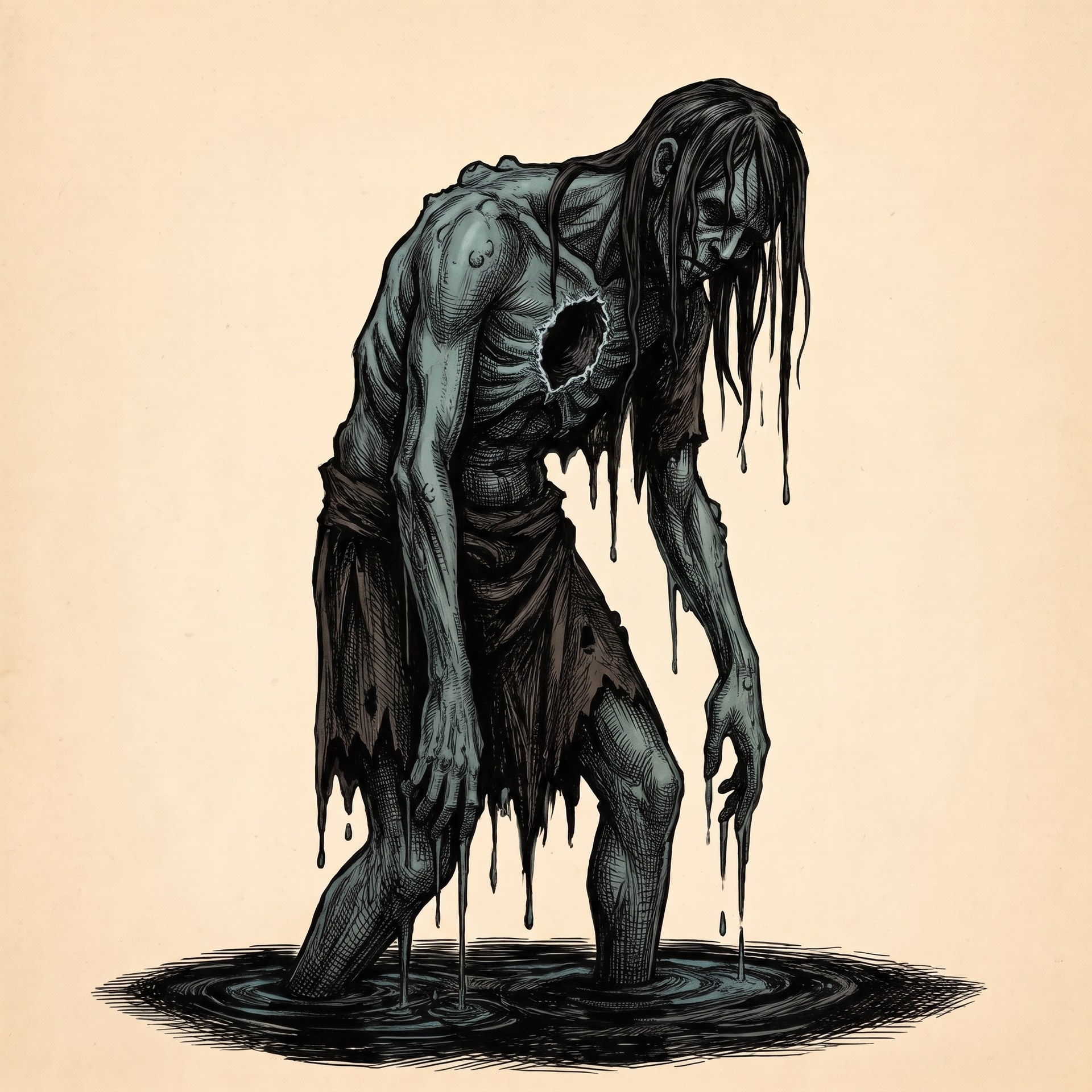 Art in progressHollow GhoulVertical, slumped, dripping, head pushed forward.Drowned
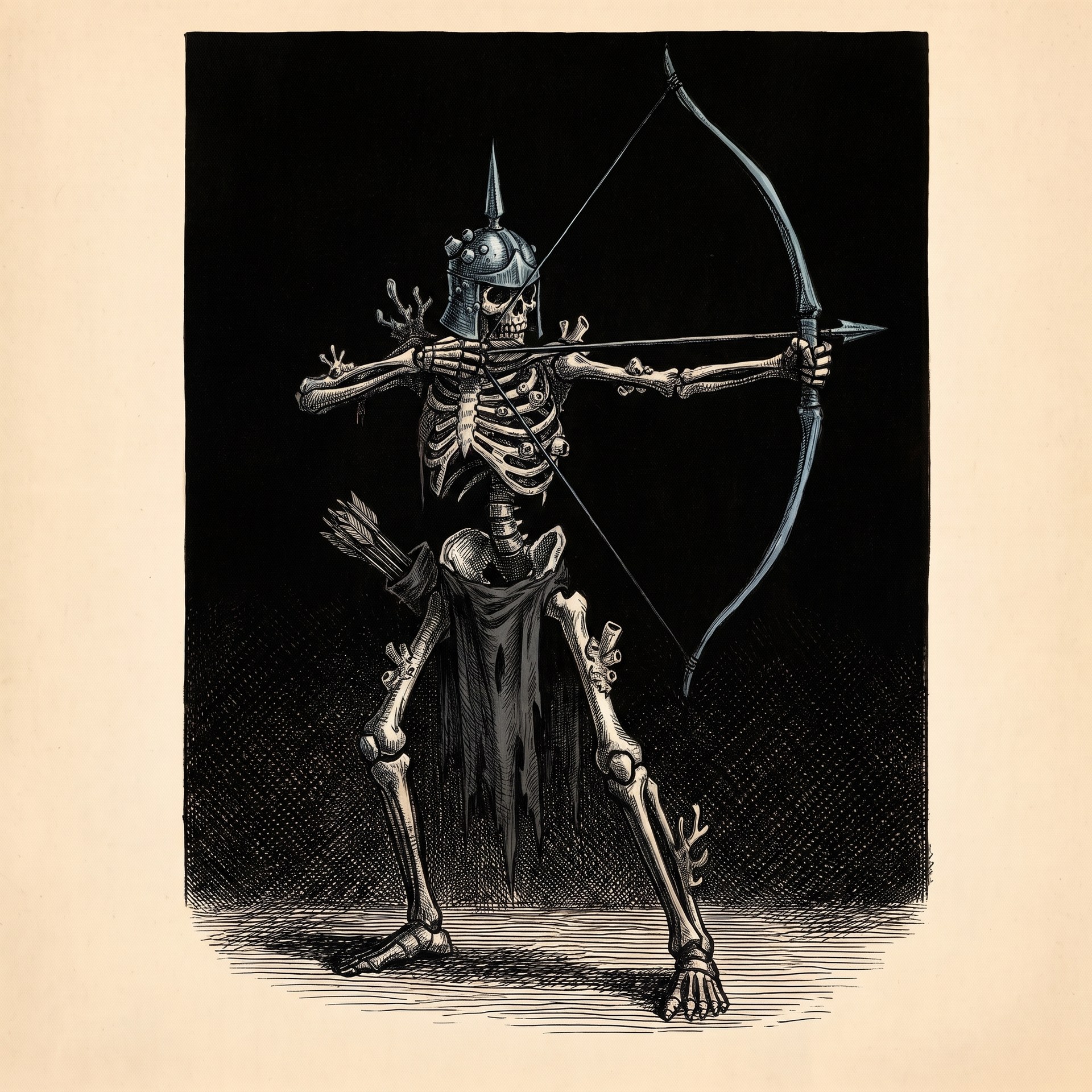 Art in progressBone ArcherThin and angular, all sticks and points, the line of a bow.Bone
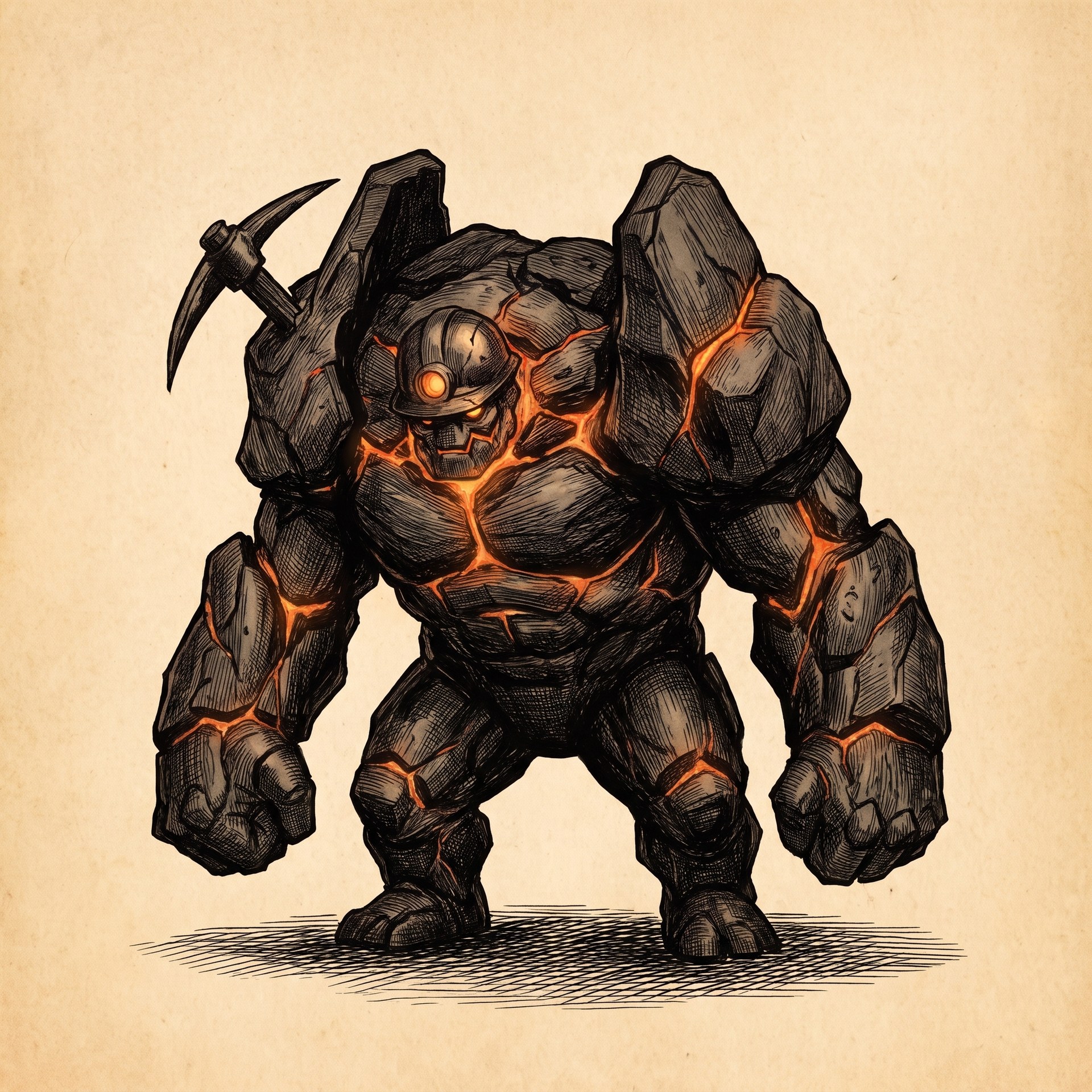
- Art in progressCavern BruteMassive and blocky, wider than tall, shoulders above the head.Stone (Cinderborn)
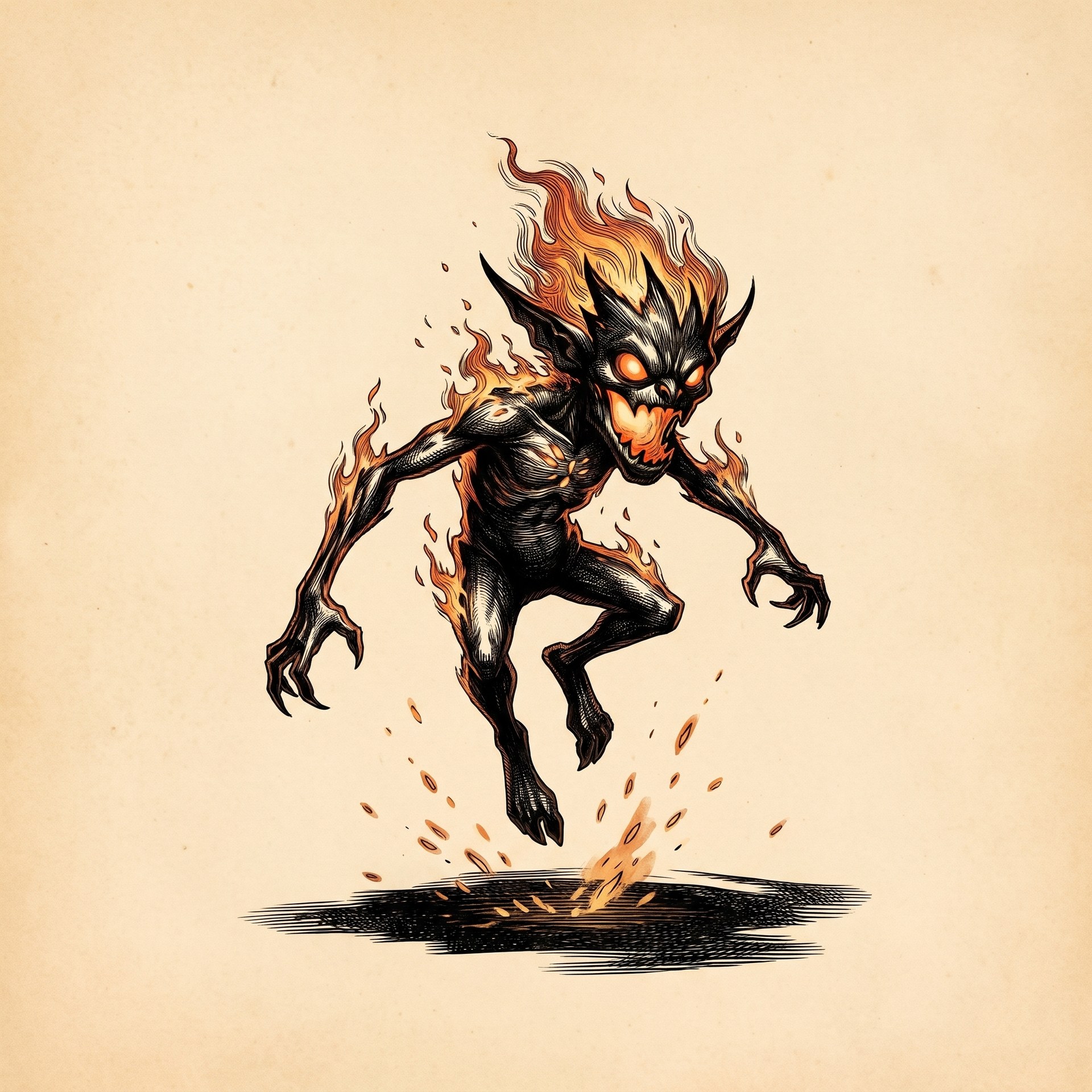 Art in progressCinder ImpSmall, jagged and flickering, never still.Fire (Cinderborn)
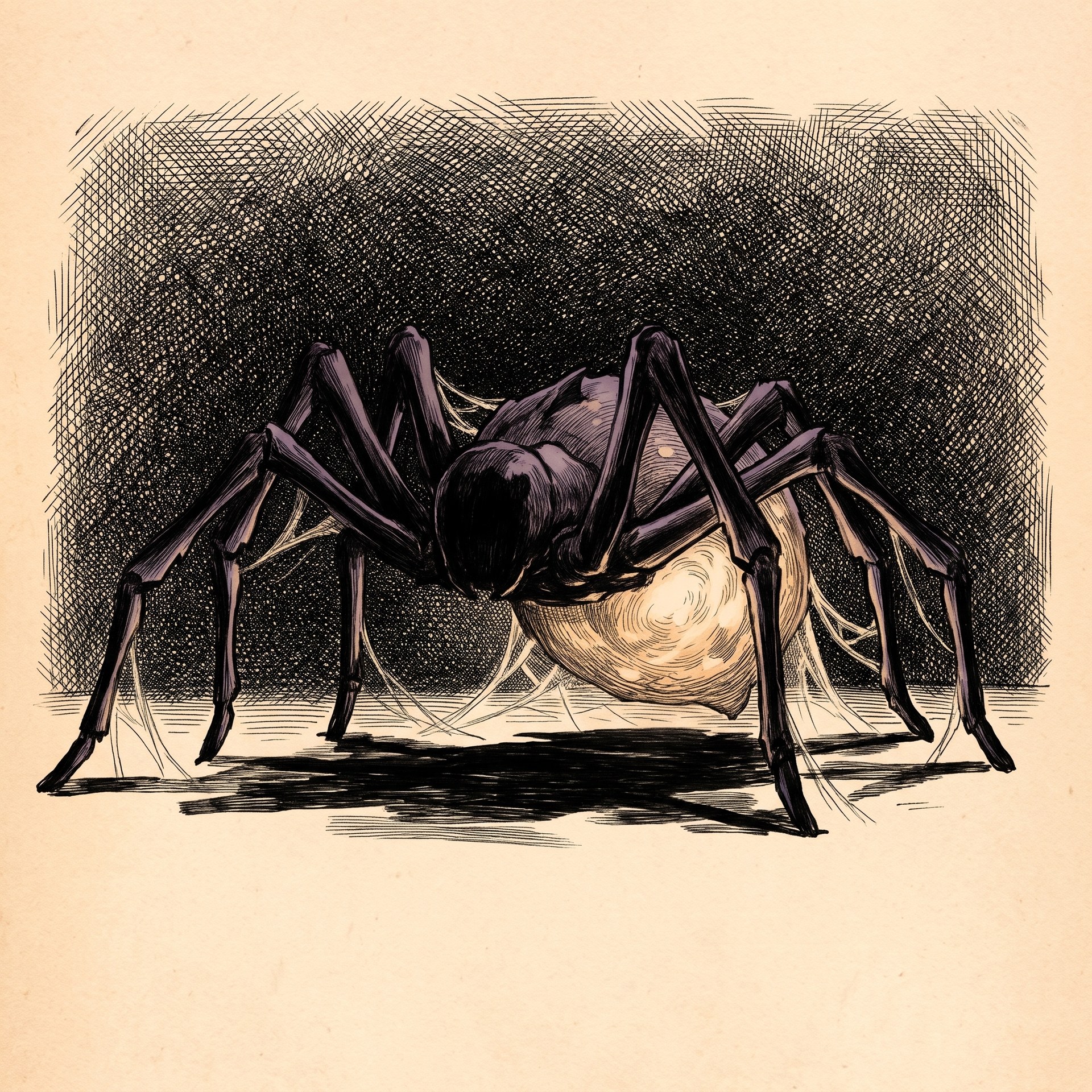 Art in progressGloom SpiderWide and low, many legs, no face.Gloom
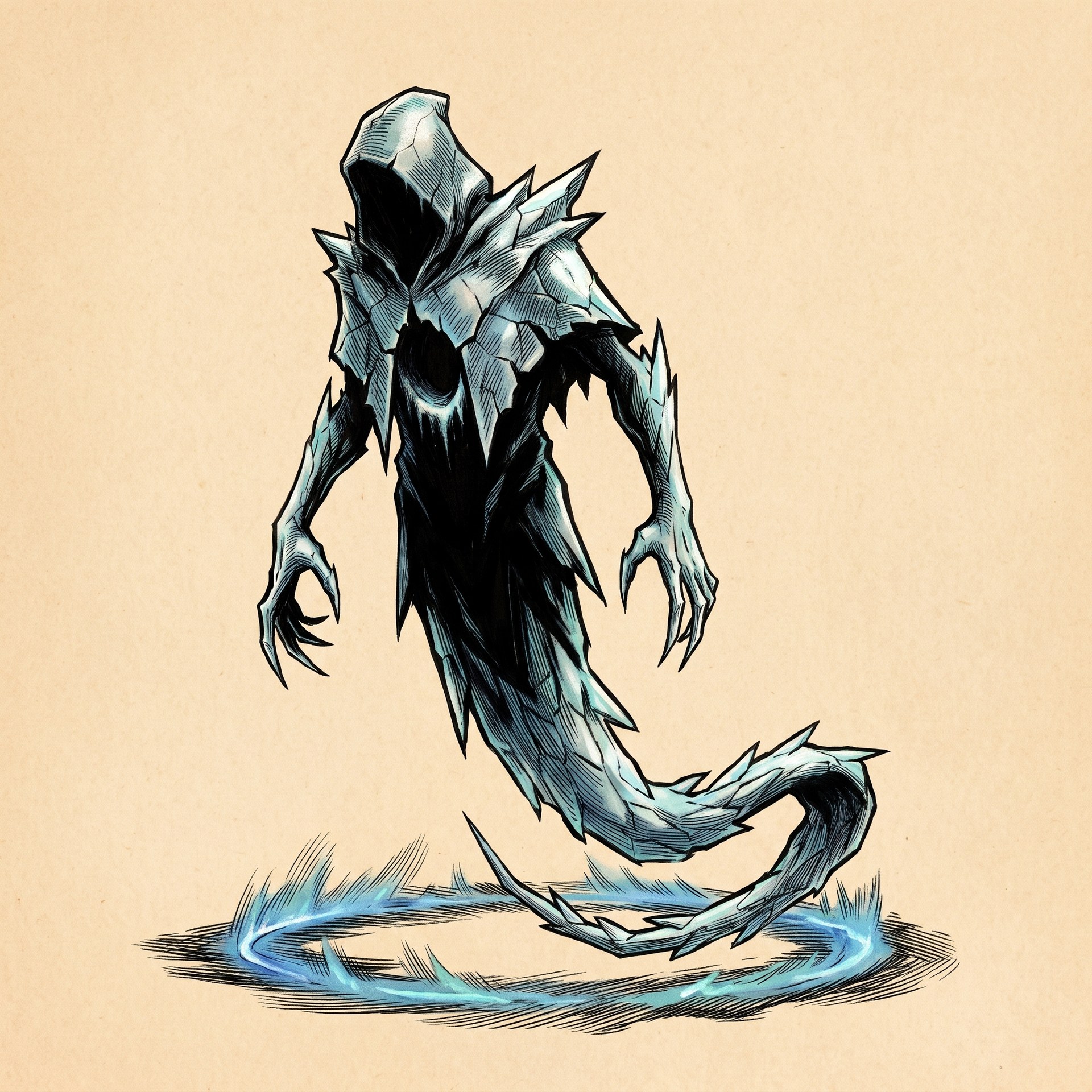 Art in progressRime WraithTapered and floating, no feet, a trail of frost.Rime
| Monster | Family | Silhouette |
|---|---|---|
| Hollow Ghoul | Drowned | Vertical, slumped, dripping, head pushed forward. |
| Bone Archer | Bone | Thin and angular, all sticks and points, the line of a bow. |
| Cavern Brute | Stone (Cinderborn) | Massive and blocky, wider than tall, shoulders above the head. |
| Cinder Imp | Fire (Cinderborn) | Small, jagged and flickering, never still. |
| Gloom Spider | Gloom | Wide and low, many legs, no face. |
| Rime Wraith | Rime | Tapered and floating, no feet, a trail of frost. |
The monsters are the world's own: Velmarch's drowned, its miners fused to the stone, the spiders of the Gloamroot. A faction's white is what makes them troops (below).
Rules for every monster
Silhouette first. A monster is drawn as a solid black shape before anything else, and it has to read that way. If two families could be confused in black, one of them changes.
Dark against bright ground, too. The climb comes up into daylight (meadows, wheat, golden moorland, a salt desert at noon) and ends on the white stone of heaven. The same silhouettes have to read as dark shapes against a bright ground, which, done right, reads even better than black on black. Loot, telegraphs and allies that glow at night get a rim or a glow strong enough to hold against the sun and against white stone.
Big shapes on top. The camera sees shoulders, heads and backs, not faces. A Cavern Brute's shoulders rise above its head; a Gloom Spider is a wide, low disc of legs; a Rime Wraith tapers to nothing where its feet should be.
Rarity is light, not geometry. Magic monsters take a blue rim, rares a gold glow, uniques an ember one. Monsters of one kind share one mesh, and materials are shared per rarity, which is what lets thousands of them be drawn at once. It reads better, too: a gold glow in a grey crowd is the first thing the eye finds.
Telegraphs are honest. A slam fills a red circle on the ground before it lands. Projectiles glow in their element's colour. Nothing that can hurt you is dark, and in heaven nothing that can hurt you is white.
Stylised, lit well. Flat or gradient-painted colour, and detail that comes mostly from light and from emissive cracks: the ember seams in a brute's stone hide, the frost breathing off a wraith.
Budgets are measured, not a style. Every monster has three levels of detail: about 4,000
vertices near the party, about 1,500 at mid range and about 400 for the far horde. Each level is
authored so that its silhouette still reads on its own. Heroes carry 8,000 to 15,000 triangles,
with at most four on screen. These numbers come from measurements on the target machine
(design/perf/vertex-budget.md and the performance notes in docs/performance.md); the 200 to 400
vertex rule of the first prototypes was a guess, and is gone.
What the paintings settled
The concept paintings fixed a few details that every model and painting of these monsters keeps. How the paintings are made is on the painting guide.
- The drowned have a hollow where the ember was. Hollow Ghouls and Rime Wraiths carry an empty, frost-rimmed hollow in the chest: the inverse of a fallen's glow, and readable from above for the same reason.
- The Gloom Spider is eyeless, and its swollen belly glows with the light it has eaten.
- The Cavern Brute wears its miner's helmet and pick fused into the rock of its body.
Heaven's three factions
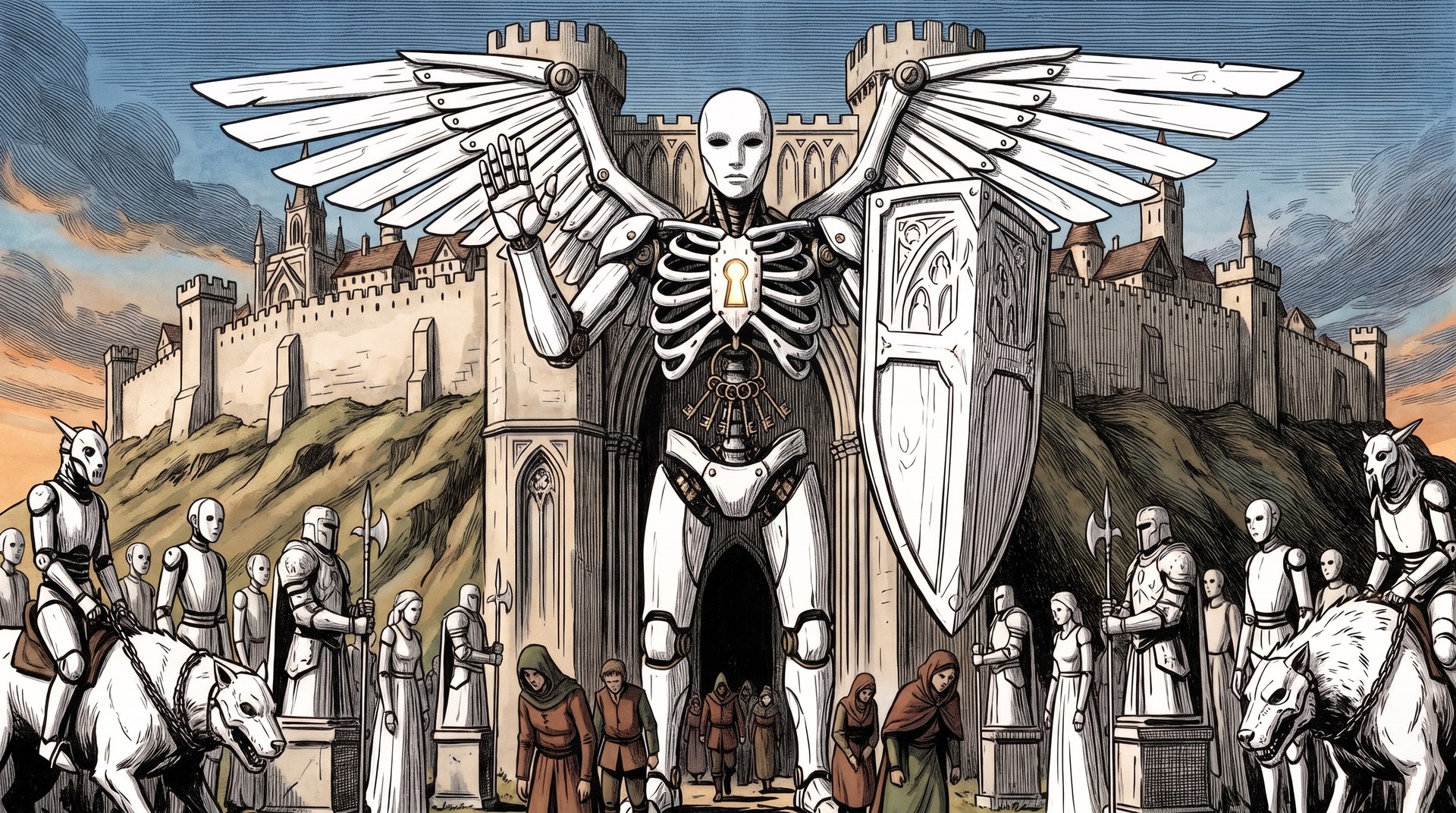
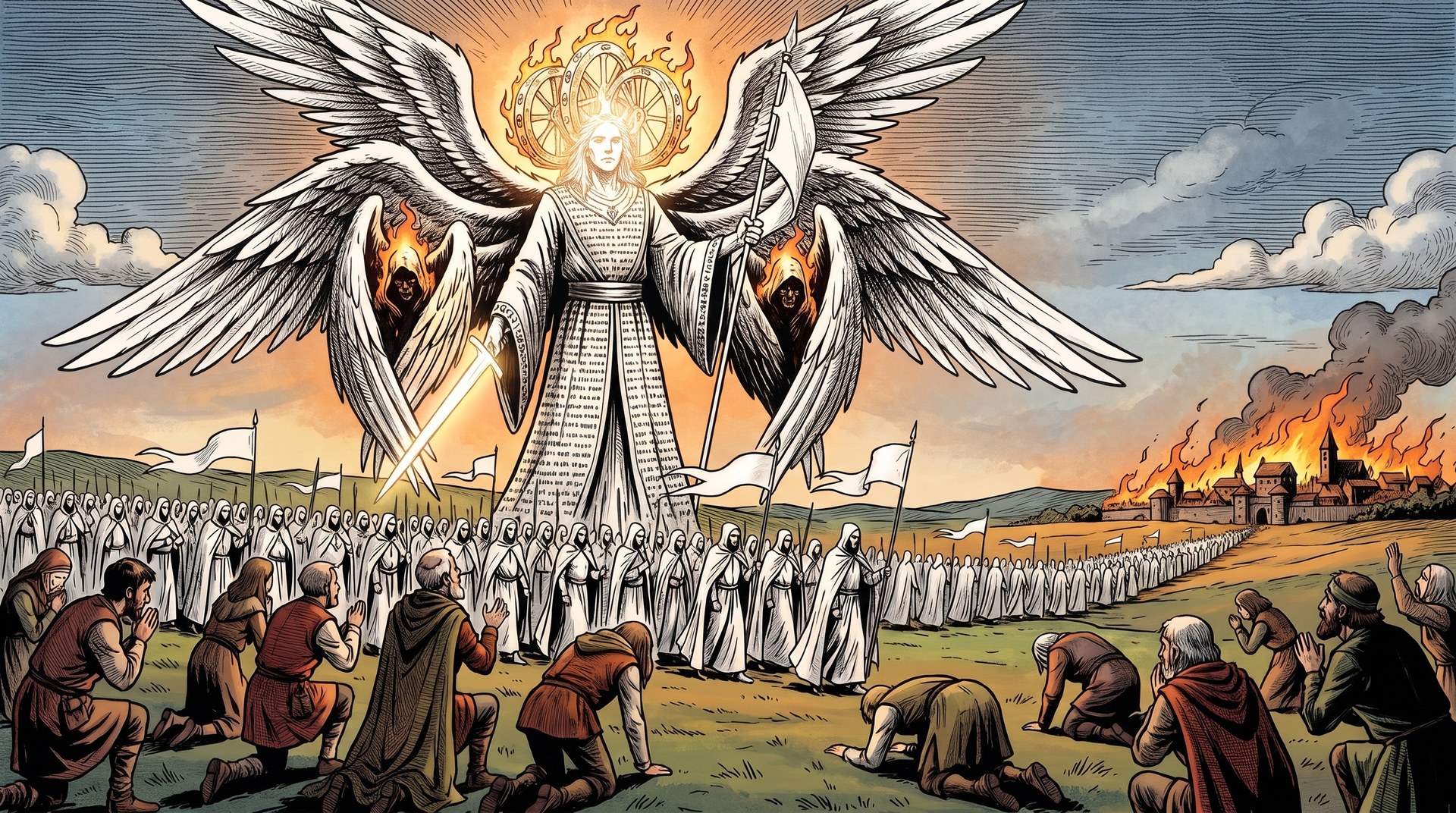
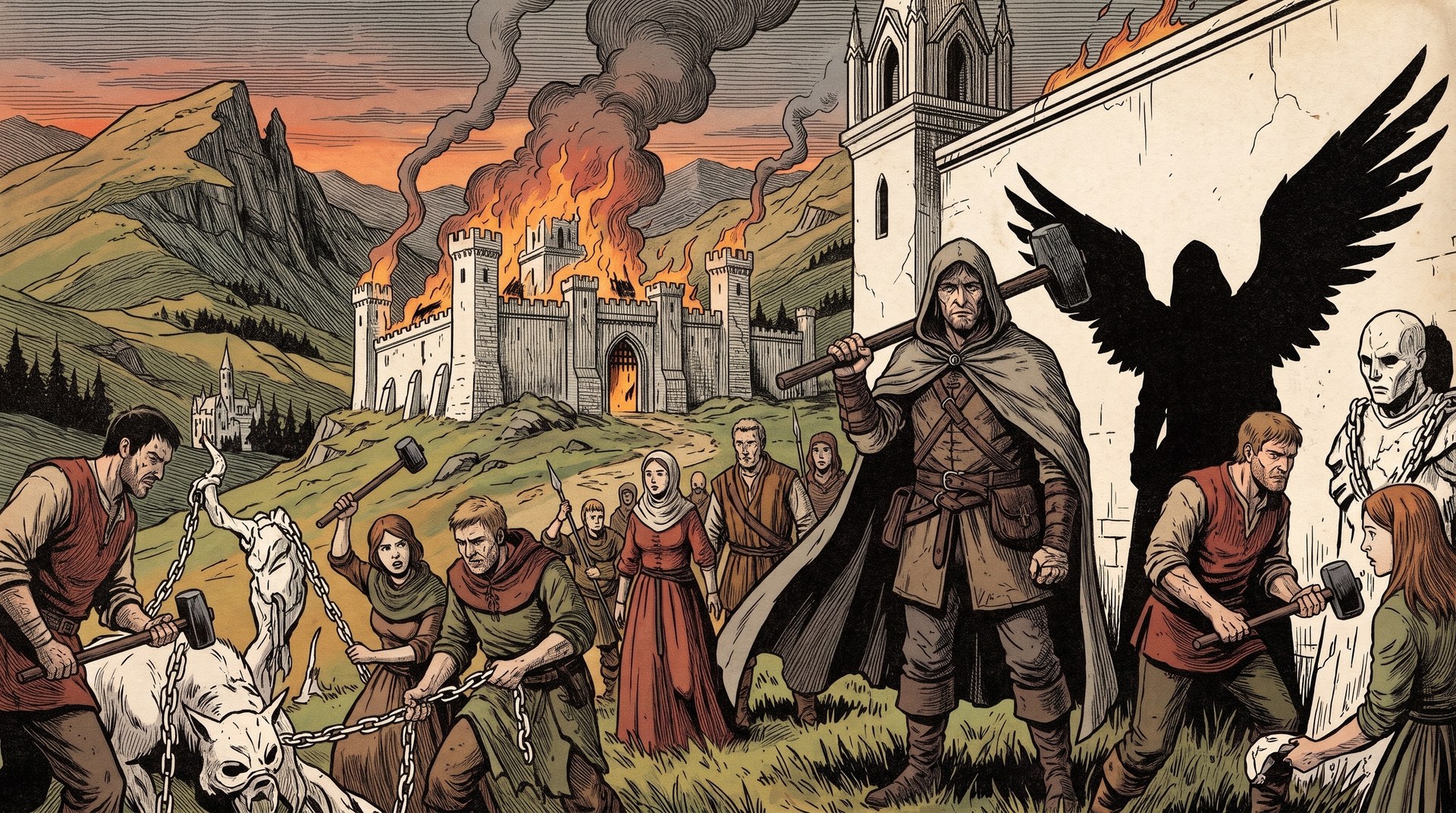
Decided by Alex on 25 October 2026: in the world, angels exist in their true forms, white and worse than heaven's glamour. The Wardens are lifeless (golems, empty armour, automata, puppets), the Heirs look godlike, and the Apostates look human. Each region's champion is an angel's true form, set down on the board at the heart of its army.
 Art in progress
 Art in progress
 Art in progress
Proposal
Heaven has no colour, so the factions are told apart by silhouette first, the way the monster families are. Three shapes, each its faction's hubris made visible.
| Wardens | Heirs | Apostates | |
|---|---|---|---|
| The read | A wide block: broad, upright, square | A tall column: thin, vertical, rising | A small figure: human height, hunched to work |
| Wings | Folded tight down the back like a stone cloak | Raised high above the head; six on a champion | Clipped short, bound with cord; in the world, only in the shadow |
| What breaks the outline | A tower shield planted beside it; keys at the belt | Tall narrow banners above the line; a halo of wheels | A hammer over the shoulder |
| How they stand | Facing outward, never toward the House; perfectly still | In long ordered lines, like a procession | In a ring, or alone in a gap |
| True form in the world | An automaton: blank mask, cage of ribs, a keyhole for a heart, joints pinned with brass | A colossus of radiance: robes written edge to edge with script, a face too bright to see, a sword of light | An ordinary weathered person in a plain cloak; the shadow behind has great broken wings |
| Their white | Porcelain, chains, padlocks, masks | Radiance, robes, banners | The shadow, the teeth, the edge of the hammer |
Wing pose is the key. Folded, raised, clipped: at 40 pixels on white stone, the line of the wings is the first thing that reads, before the shield, the banner or the hammer. Keep it on every angel of a faction, from the champion down to the still angels on a wall.
Troops: the white on the world's own things
Proposal
A faction makes troops of the world's monsters and dead, and its white is how you tell whose they are. The white is a mark laid on the family's own silhouette, never a new silhouette, so a Warden-held ghoul still reads as a ghoul.
- Warden troops are bound. White masks with no eyes, white chains, padlocks on the chains; beasts on leashes; smaller white puppets and stone sentinels among them. The mark sits on the head, which is what the camera sees. A Warden horde stands in ranks and moves together.
- Heir troops are converted. White robes and hoods over the living and the risen dead, white banners carried above the crowd, a radiant thing at the centre the crowd never looks up at. The mark is the banner, which breaks the outline upward. An Heir horde comes in lines, like a procession.
- Apostate ground runs loose. No troops of their own: ordinary people with hammers, and the world's things freed of the Wardens' hold, still wearing the broken white of the chains they slipped, a trailing end of white chain on a dark shape. An Apostate region comes at you from every side at once.
- A fallen's own raised dead wear the shapes of the dead in the fallen's own white, with the coal's red in their eyes (decided). Red eyes in a white horde read as the enemy fallen's, never a faction's.
- The more white, the more played. A magic piece carries more white than a plain one, and a rare is moved by an angel's own hand (both decided); here, a rare is half white. The rarity rim stays on top, so rarity still reads first.
Players and people
The fallen follow the same rules. Their signature is the ember glowing through the chest, and gear changes their outline at the shoulders and head first because that is what the camera sees. Decided by Alex on 25 October 2026: a fallen's faction shows in its shadow, its wings and the light off it, never on its body or gear, so a party of mixed banners keeps four outlines of its own.
Proposal
- The ember reads on any ground. Against black it is the light; against a sunlit field and against white stone it is the only warm dot in the frame. Model it so it reads in all three.
- A fallen's wings come back as its faction shows, from its seat on: folded, raised or clipped, like its faction's angels, so the wing pose that tells a faction's hosts apart tells kin apart too.
- The people of the world carry no white at all: farmers, priests, traders and children are pieces nobody plays. They wear the world's earthy reds, browns and greens, smaller and bundled against the cold, and in Hearthold lit from below by braziers.